
AI for Resellers That Actually Learns You
Self-learning reseller AI, what it does to your titles and your prices, and where it still falls short. Real numbers from 432 sellers and 6,245 sold items.
By Chris Taylor, founder of FlowLister. I built FlowLister after manually listing 2,000+ eBay items from thrift stores and estate sales. Every number in this article came out of the production database on the day it was published.
Most AI for resellers treats you like everybody else. Same title shape, same price logic, same output whether you sell hardcover books or NOS truck parts.
FlowLister works differently, and this morning is the proof. At 5:00 a.m. UTC our system wrote a new rule off edits sellers made yesterday. There are 487 of those rules live right now. 208 of them belong to one specific seller and to nobody else.
That's the whole idea. Your corrections stop being wasted. Here's exactly how it works, what the numbers actually are, and where it still falls short.
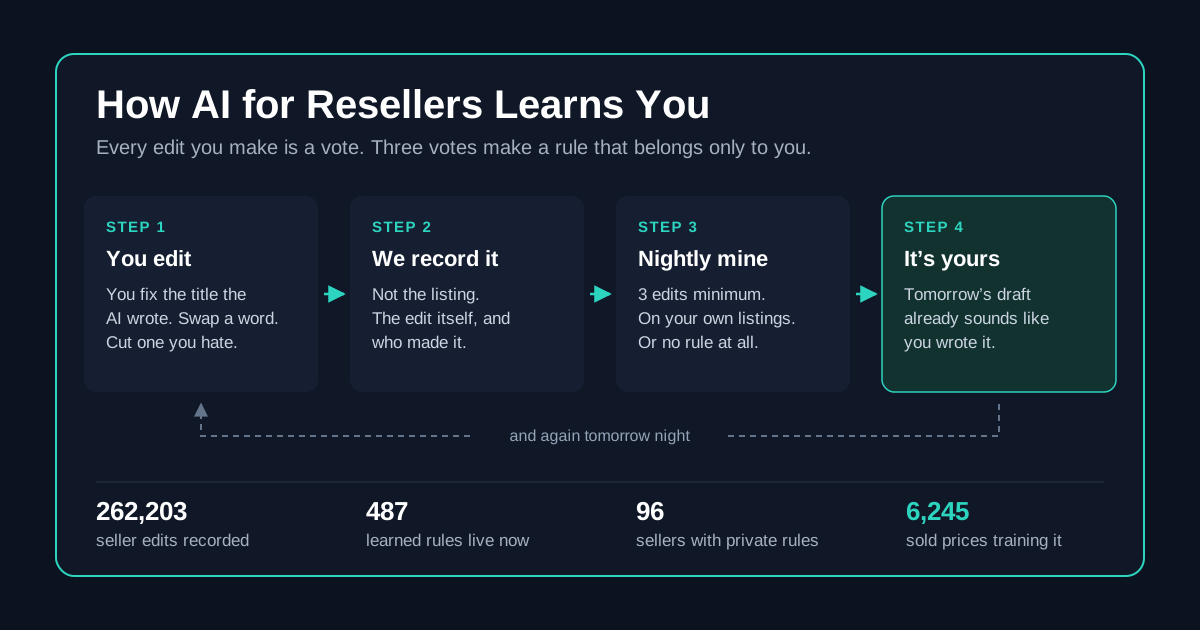
Every edit you make is a vote
When you fix a title, FlowLister writes it down. Not the listing. The edit.
In the last 30 days alone that's 96,927 edits and 19,405 price changes. Every one of those is you telling the AI it was wrong. Most tools throw that away. We keep it.
What self-learning AI actually looks like in your account
Here's a real rule running in production right now, from a seller who moves books:
Titles: this seller prefers (only when factual): hc, ex-library, pb. Avoids: hardcover, paperback.
He just kept editing “Hardcover” out and “HC” in, and after enough times the system noticed and stopped fighting him.
Here's the part that proves it's really personal. Two sellers, one word, opposite rules.
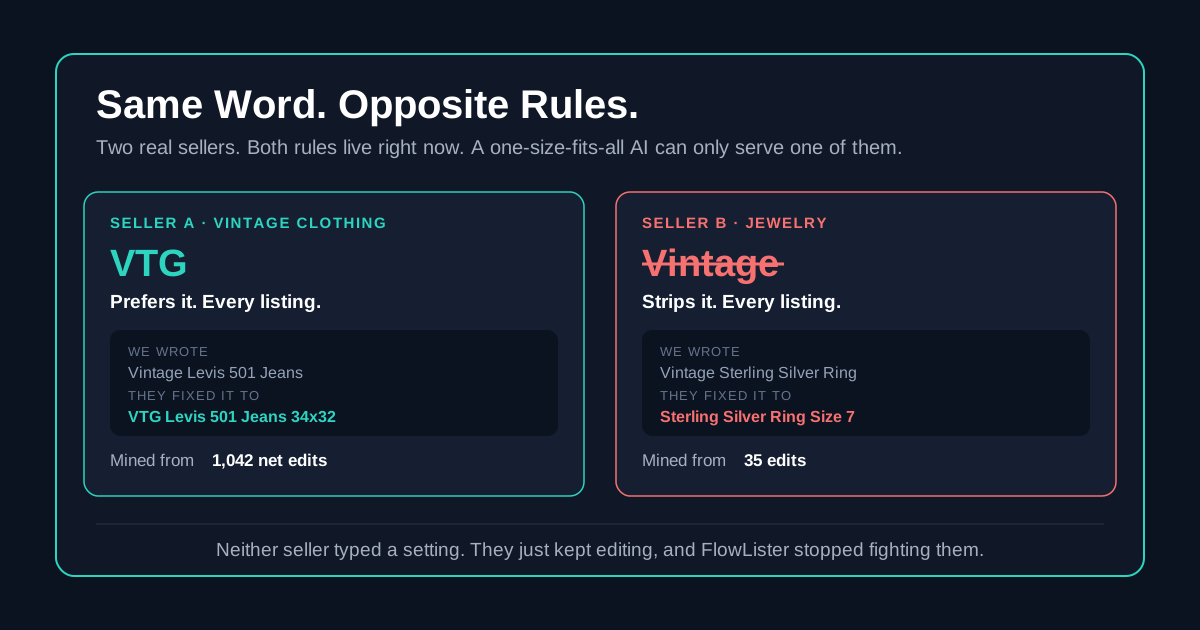
Both sellers are right for their own business, and both get what they want. That's the difference between reseller AI and a generic AI listing tool. A global rule can't serve both of those sellers. A per-seller rule serves both.
It takes three edits. Then it's yours.
No setup. No training mode. No prompt engineering. A rule only goes live when it clears real gates:
- The same edit on 3 of your own listings. One correction is a typo. Three is a preference.
- Your listings only. The count is per seller. Another seller making the same edit does not move your number, and yours does not move theirs.
- Safe edits only. A personal rule can swap a word or remove a word. Those are the only two shapes it is allowed to take.
- It never runs unowned. A personal rule that somehow loses the account it belongs to is refused at execution rather than applied to everyone.
- Nightly mining. It runs while you sleep. The rule is waiting for you the next morning.
Right now 96 sellers have their own private rule set, spread across 192 categories. Those rules did not exist in the product when they signed up. Their own work built them. If you want to shortcut it, you can also write standing style instructions by hand in Settings, and the AI follows those from listing one.
The pricing side learns from real money, not guesses
This is the part I care about most.
Most pricing tools read active listings. Active listings are asking prices, and asking prices are wishes. We track what actually sold.
On top of that we mine the 46,161 times a seller overrode our price. If you consistently price a category higher than we suggest and your stuff still sells, that is not you being wrong. That is us being wrong, and the AI pricing tool adjusts.
The comp-cleanup rules are small and boring. Strip “eyewear” from sunglasses-case lookups. Drop a model token that was poisoning the pool in tail light assemblies. They make every price after them better.
What it will never do
An AI that learns from you is only safe if it has hard limits. Ours has three.
It can't invent a fact. Title learning can change wording. It cannot add a claim unless that claim already exists in the photo analysis, the item specifics, your notes, the UPC/MPN/category evidence, or your own accepted edit on that listing. Sold comps can suggest phrasing. They can't suggest facts.
Price moves are capped, and not symmetrically. A learned adjustment can move a price at most 15% down and at most 5% up. The ceiling on raising your price is deliberately a third of the ceiling on lowering it, because a price that is too high costs you a sale you never see.
It turns itself off. Learned pricing is checked every night against historical outcomes. If the training data shifted, learned pricing switches off by itself and stays off until the 3:20 a.m. replay verifies it again. I'd rather it go quiet than go confident and wrong.
Where it still falls short
96 sellers have personal rules. 432 feed the system. So about one in five has enough edit history for the AI to have learned them specifically. If you're new, you get the general model first and build your own over your first few weeks.
And on September 1 I found a bug that had been costing people exactly this. The nightly miner was supposed to read ten years of edit history. It was actually reading about five weeks, because the row limit hit before the date filter did. 109 of 313 editing sellers were invisible to it. Worse, it read its own truncated view as “full coverage” and retired good rules because their evidence had scrolled out of the window.
It's fixed. Sellers with rules went from 59 to 78 in one night and deterministic rules went from 9 to 21, at a cost of 3 seconds of runtime. But it was broken for a while, and people paid for it in edits they had to make twice.
It's AI. It's going to miss things. I'd rather tell you that than sell you a version that never misses.
Why this is genuinely good news for your business
Everything else in reselling gets harder over time. Fees go up. Categories get more crowded. Competition gets better.
This is the one part of your operation that goes the other way. The tool you use in month six knows more about how you sell than the one you used in month one, and you didn't do anything extra to get there. You just kept working.
That's what compounding looks like in a one-person business. Sourcing doesn't compound. Photography doesn't compound. Your listing voice does, now, if something is writing it down.
The 20% of listings you edit today are not lost time. They're the last time you'll have to make that particular edit.
Try it on your own inventory
FlowLister costs 8 cents a listing. It'll take a few weeks of your edits before it starts sounding like you, and it won't be perfect when it does.
It's still faster than the twenty minutes you were about to spend on that listing.
Frequently Asked Questions
Short answers to common seller questions about this workflow.
Related Resources
- Best eBay AI Listing Tool 2026 — FlowLister plus 10 ranked
- eBay sold comps tools — pricing from what actually sold
- Free eBay title generator
- eBay listing optimization — titles, specifics, and photos
- 12 best reseller apps, ranked by workflow step
- Worth It — instant eBay value from a photo
- FlowLister pricing — plans and credit breakdown